Borescopes and Push Cameras for Turbine, Boiler and Plant Inspection
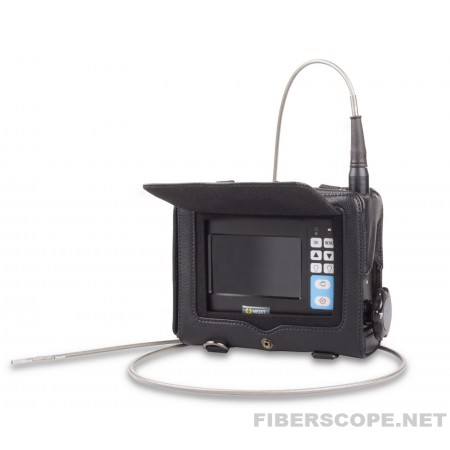
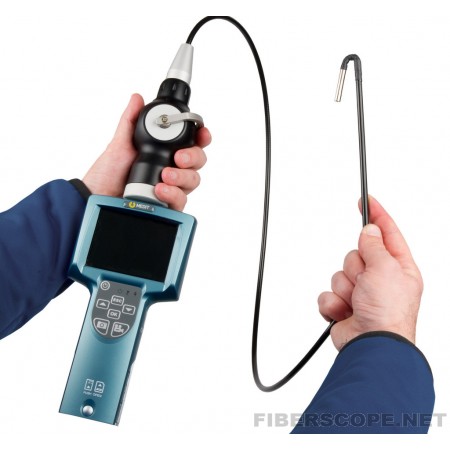
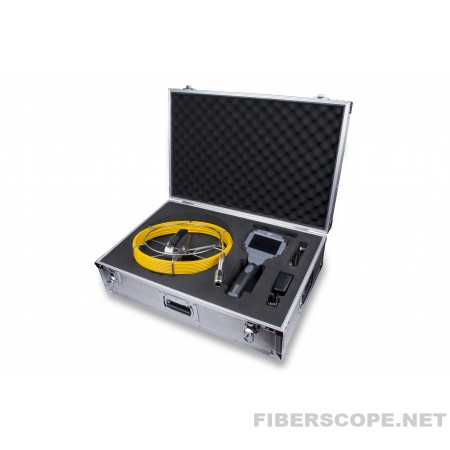
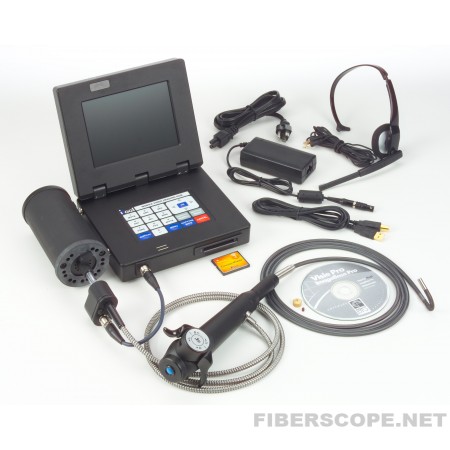
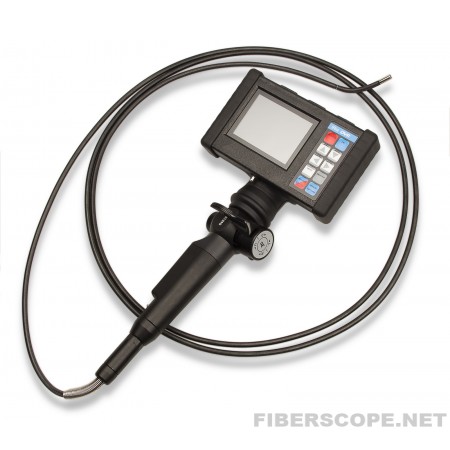
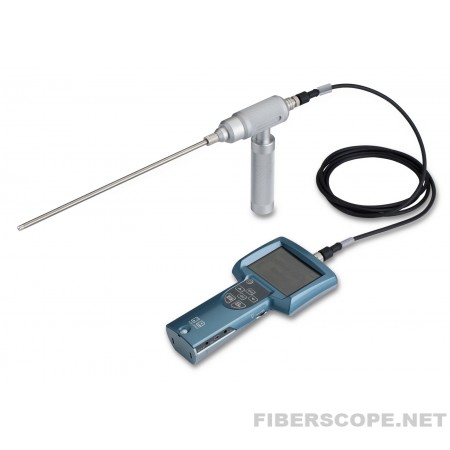
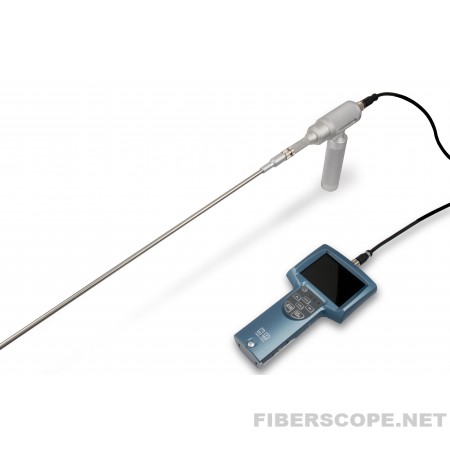
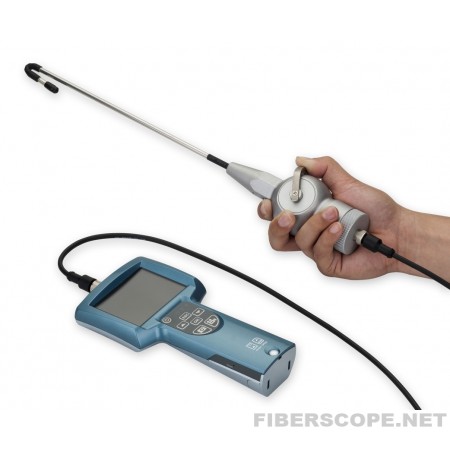
We supply non-destructive inspection equipment, including video borescopes, fiberscopes and pipe cameras, for work in power generation and mining. Inspecting a component in place is what allows maintenance to be planned around its actual condition.
We also carry out the inspection ourselves, at the customer's own site. One of our technicians takes the probe to the turbine or the pipeline where it stands and hands the recorded images to whoever is planning the outage.
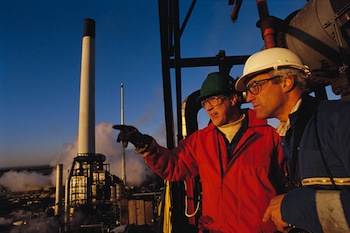
A steam or gas turbine is built to stay shut. Opening one means lifting a casing that weighs many tonnes, and the work runs into days or weeks before anybody has looked at a single blade. That is why such machines carry inspection ports, and why a borescope inspection through those ports is a routine part of how large rotating machinery is maintained.
Remote visual inspection, shortened to RVI, is done with borescopes and with inspection cameras. The list of things an engineer asks it to find hardly changes from one plant to the next: pitting, cracking, weld defects, corrosion and erosion, and whatever else has gone wrong on a surface that is hard to reach any other way. All of it can be examined without dismantling the machine, and that is what holds downtime down and lets a planned maintenance programme keep to its dates. Access to the machine is often by ladder, by catwalk or through an opening too small to put a shoulder through, so the instrument for this work has to be portable and battery powered.
Two things make this work different from bench inspection. The first is where it happens. The instrument is carried up to the machine and not the other way round, so a heavy one that needs a mains socket is not really an instrument at all. The second is time. Inspections of this kind are usually carried out inside a planned outage, where every hour is scheduled in advance and the inspection sits on the critical path, so the result has to be recorded as it is found rather than reconstructed afterwards from memory.
We also carry out the inspection ourselves, at the customer's own site. One of our technicians takes the probe to the turbine or the pipeline where it stands and hands the recorded images to whoever is planning the outage.
A steam or gas turbine is built to stay shut. Opening one means lifting a casing that weighs many tonnes, and the work runs into days or weeks before anybody has looked at a single blade. That is why such machines carry inspection ports, and why a borescope inspection through those ports is a routine part of how large rotating machinery is maintained.
Inside a turbine
The probe goes in through a port in the casing and the rotor is turned slowly, by hand or by a barring gear, so that every blade in a row passes the tip in turn. The operator looks at leading edges for impact damage and for erosion, at trailing edges for cracking, at tips for rubbing against the casing, and at surfaces for the loss of a protective coating. On a gas turbine the hot section gets the closest attention: burner cans, transition pieces and nozzle guide vanes crack and distort because of what they are asked to survive. On a steam turbine the recurring finding is solid particle erosion, where scale carried off boiler tubing scours the leading edges of the first stages.Remote visual inspection, shortened to RVI, is done with borescopes and with inspection cameras. The list of things an engineer asks it to find hardly changes from one plant to the next: pitting, cracking, weld defects, corrosion and erosion, and whatever else has gone wrong on a surface that is hard to reach any other way. All of it can be examined without dismantling the machine, and that is what holds downtime down and lets a planned maintenance programme keep to its dates. Access to the machine is often by ladder, by catwalk or through an opening too small to put a shoulder through, so the instrument for this work has to be portable and battery powered.
Boilers, exchangers and the rest of the plant
A boiler is a bundle of tubes and headers, and the questions asked of it are wall thinning, scale, cracking near welds, and whether a previous repair is still sound. Condenser and heat exchanger tubes are inspected from the tube ends, and the finding is usually pitting, deposits or erosion at the inlet. On the electrical side, the air gap between a generator rotor and its stator is narrow enough that inspecting it without withdrawing the rotor is worth a great deal, and a slim probe is how that is done. Feedwater lines, valve bodies and pump casings all get the same treatment for the same reason.Mining and heavy plant
Mining equipment is inspected for a slightly different reason. The machines are large, they work far from a workshop, and moving one for examination is often harder than examining it in place. Gearboxes on hoists, mills and conveyor drives are opened at an inspection plug so that gear teeth and bearing surfaces can be seen without draining and stripping the housing. Hydraulic cylinders, drill strings and structural box sections are all closed volumes with a way in. The pattern is the same everywhere: if a machine has an opening, somebody will eventually want to look through it.Two things make this work different from bench inspection. The first is where it happens. The instrument is carried up to the machine and not the other way round, so a heavy one that needs a mains socket is not really an instrument at all. The second is time. Inspections of this kind are usually carried out inside a planned outage, where every hour is scheduled in advance and the inspection sits on the critical path, so the result has to be recorded as it is found rather than reconstructed afterwards from memory.