Video Borescopes for Aircraft Engine and Airframe Inspection
Quality assurance matters more and more in aerospace manufacture. Borescope inspection lets engineers examine parts of an aircraft without taking them apart, including:
* Compressor and turbine blades, one stage at a time
* Combustion chambers, liners and nozzle guide vanes
* Gearboxes, accessory drives and bearing compartments
* Wing box structures, fuel tanks and the cavities behind a skin panel
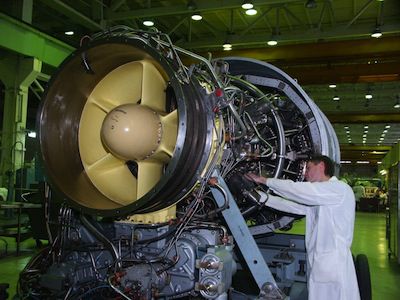
On-condition maintenance depends on finding a fault before it causes a failure, so that preventive work can be planned. Borescopes have become one of the main tools for that kind of inspection. If maintenance personnel find that a part is approaching the end of its life, the failure can often be delayed or prevented, or the part replaced at a convenient time rather than after it has failed. Modern engines are already built with borescope ports, and a guide tube brings the probe to the area being inspected. A proper borescope inspection shortens aircraft downtime and shows what service is actually needed.
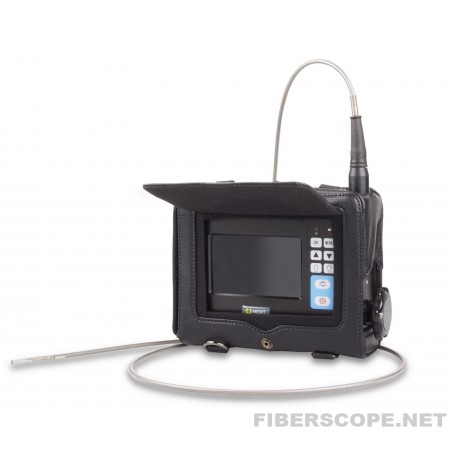
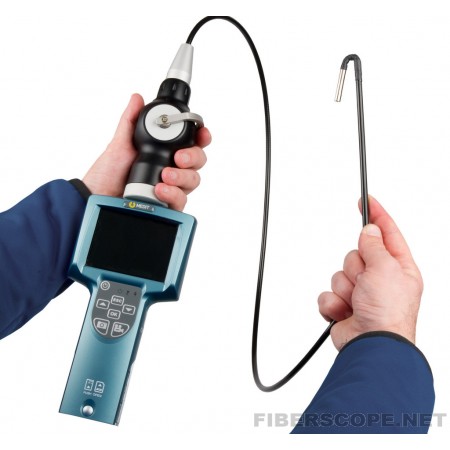
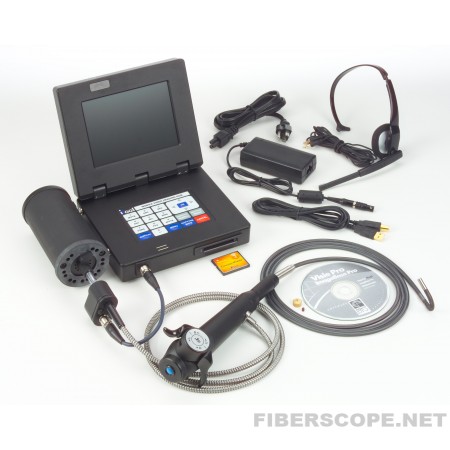
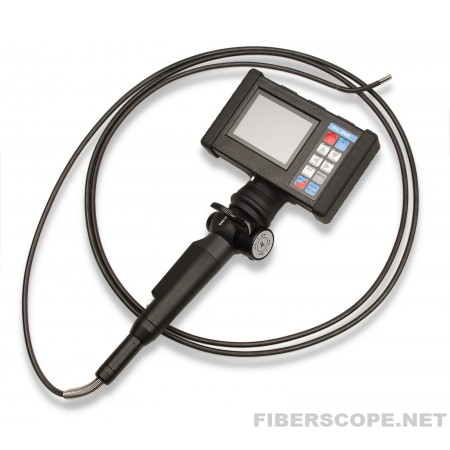
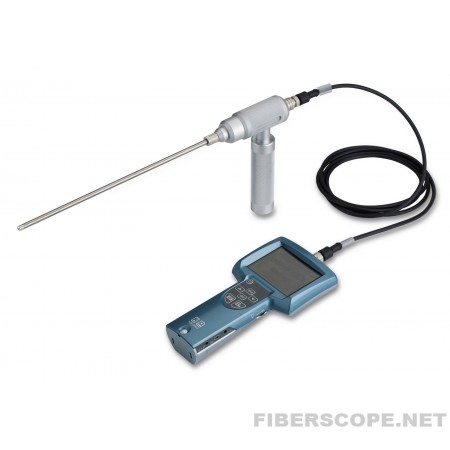
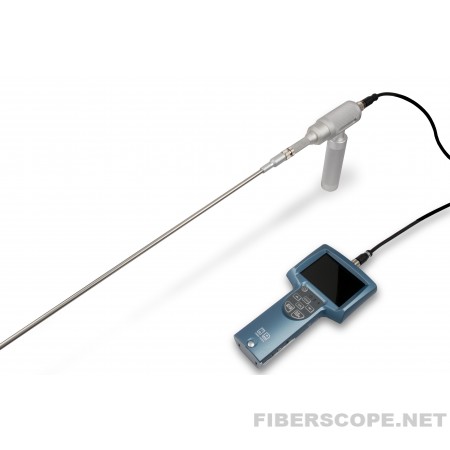
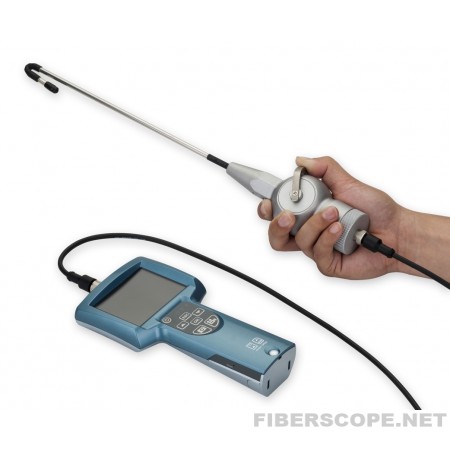
The industrial videoscopes, fiberscopes and borescope systems we supply are used to inspect turbines and other hard to reach areas, and to locate and monitor damage caused by foreign objects.
We also carry out the inspection ourselves, at the customer's own site. One of our technicians travels to the hangar or the engine shop, passes the probe through the ports there, and leaves behind the recorded images and what they show.
* Compressor and turbine blades, one stage at a time
* Combustion chambers, liners and nozzle guide vanes
* Gearboxes, accessory drives and bearing compartments
* Wing box structures, fuel tanks and the cavities behind a skin panel
On-condition maintenance depends on finding a fault before it causes a failure, so that preventive work can be planned. Borescopes have become one of the main tools for that kind of inspection. If maintenance personnel find that a part is approaching the end of its life, the failure can often be delayed or prevented, or the part replaced at a convenient time rather than after it has failed. Modern engines are already built with borescope ports, and a guide tube brings the probe to the area being inspected. A proper borescope inspection shortens aircraft downtime and shows what service is actually needed.
On the wing, blade by blade
The engine stays on the wing. A probe is passed through a port built into the case for that purpose, and the rotor is turned with a dedicated tool so that each blade in a stage comes past the tip in order. What the inspector reads depends on the stage. On the fan and the early compressor it is damage from something that went through the engine: nicks and tears along leading edges, and blades bent or curled at the tip. In the hot section it is heat: cracking in a combustor liner, burning and coating loss on a turbine blade, and distortion of the vanes that sit between the stages.Why the interval says when
A borescope inspection of an engine is not usually a response to a fault. It is scheduled, at intervals the engine manufacturer sets out in its maintenance documentation, and it is one of the things that makes on-condition maintenance possible at all. The value builds over successive inspections rather than appearing in any single one: the same blade seen at the same station, three inspections apart, shows the rate at which something is growing, and a rate is what lets a decision be planned rather than forced.The industrial videoscopes, fiberscopes and borescope systems we supply are used to inspect turbines and other hard to reach areas, and to locate and monitor damage caused by foreign objects.
We also carry out the inspection ourselves, at the customer's own site. One of our technicians travels to the hangar or the engine shop, passes the probe through the ports there, and leaves behind the recorded images and what they show.